Commerce has changed.
People don’t discover products through search or campaign launches the way they used to. They discover them through content—through creators showing real use, real opinions, and real context. What people watch, save, and engage with now determines what gets seen next.
TikTok Shop sits at the center of that shift.
Most brands, though, still treat it like a channel. A place to list products, send samples, and track revenue. That’s where things start to break.
TikTok Shop isn’t just where transactions happen. It’s where demand is created.
A product might show up on TikTok first, then get searched on Amazon, purchased on a brand site, and show up again later through email or retail. The sale might happen somewhere else, but the influence usually starts here.
That’s why measuring TikTok Shop on in-app revenue alone misses what’s actually happening. It’s not just capturing demand. It’s shaping it.
This changes how growth works.
What used to be a linear process—awareness, consideration, conversion—now happens all at once. A single piece of content can introduce a product, build trust, answer questions, and drive a purchase.
And that changes the role of creators.
They’re not just there to distribute content. They’re how brands figure out what actually works. They surface what resonates, what builds confidence, and what gets someone to convert.
That learning is the foundation. Not an afterthought.
When brands use it properly, everything else becomes more effective—content improves, paid performs better, and decisions are based on real signals instead of assumptions.
Because that’s what TikTok responds to: signals. Not polished messaging. Not brand intention. Real behavior.
Content that people engage with gets amplified. Content that doesn’t, doesn’t. The system is constantly learning from how people respond.
That creates a different kind of growth loop.
Content drives response. Response creates signals. Signals drive distribution. And distribution builds demand.
Conversion is just the outcome of that process working.
Most brands stall because they don’t generate enough signal. There isn’t enough content, enough variation, or enough consistent creator output to learn from. So nothing compounds.
That’s usually when paid media gets overused.
But paid doesn’t create performance. It scales what’s already working. When the foundation is strong, it becomes a multiplier. When it’s not, it just exposes the gaps faster.
The same applies to operations. Fulfillment, product quality, and customer experience all feed into trust. And trust feeds directly into performance.
Everything is connected.
That’s why the brands seeing real results aren’t running isolated campaigns. They’re building systems that tie creators, content, paid, and operations together.
TikTok Shop just makes that system more visible.
It’s not just another platform. It’s a signal-driven environment that shows, in real time, what the market actually responds to—and what’s worth scaling.
If you can build around that, it doesn’t just improve TikTok performance.
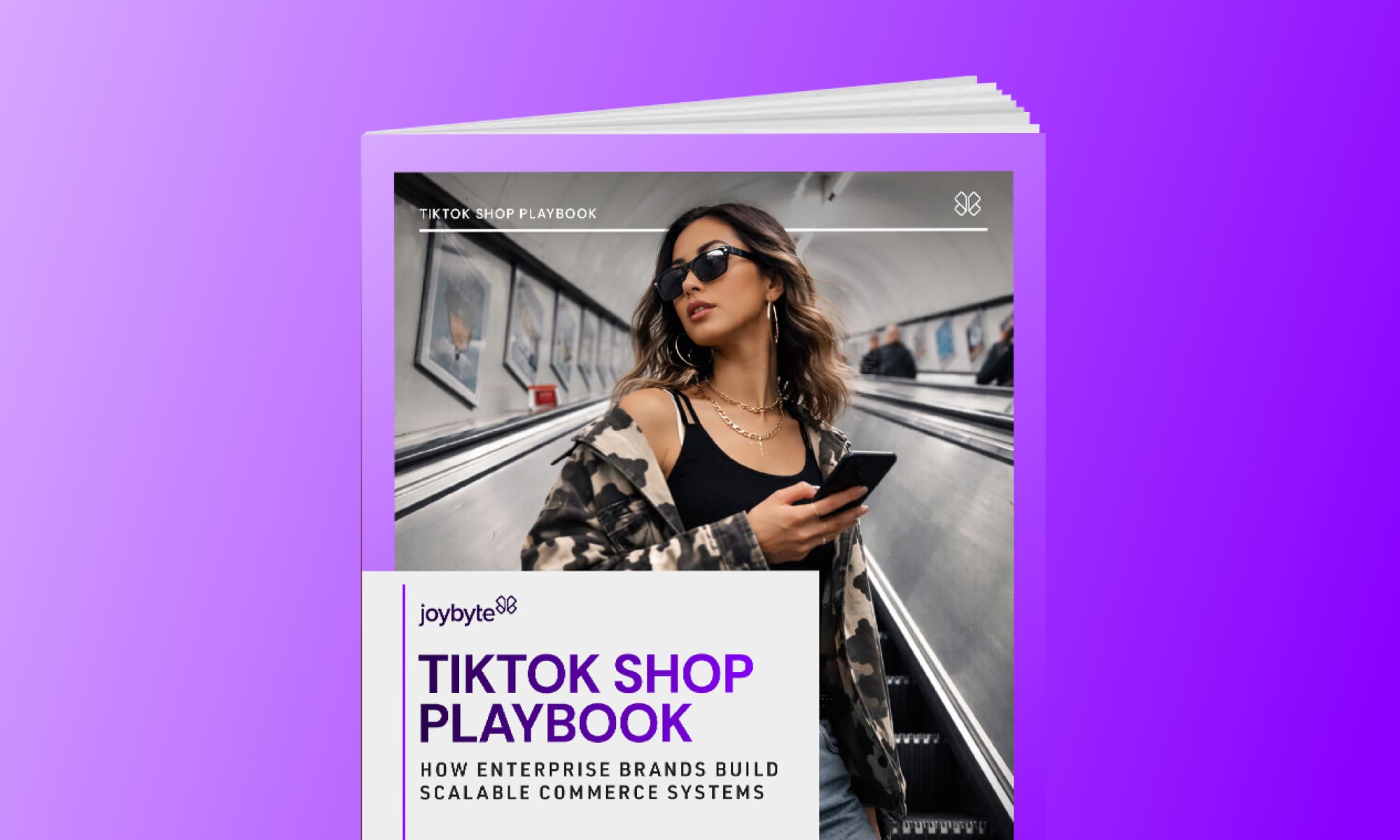
It improves everything downstream. If you’re thinking through how to structure this for your brand, we break it all down in the TikTok Shop Playbook. Download your free copy here.