Artificial intelligence has quickly become part of the modern marketing toolkit.
Brands are using it to generate images, create content variations, speed up production, and test creative ideas faster than ever before. The technology is evolving rapidly, and now regulation is beginning to catch up.
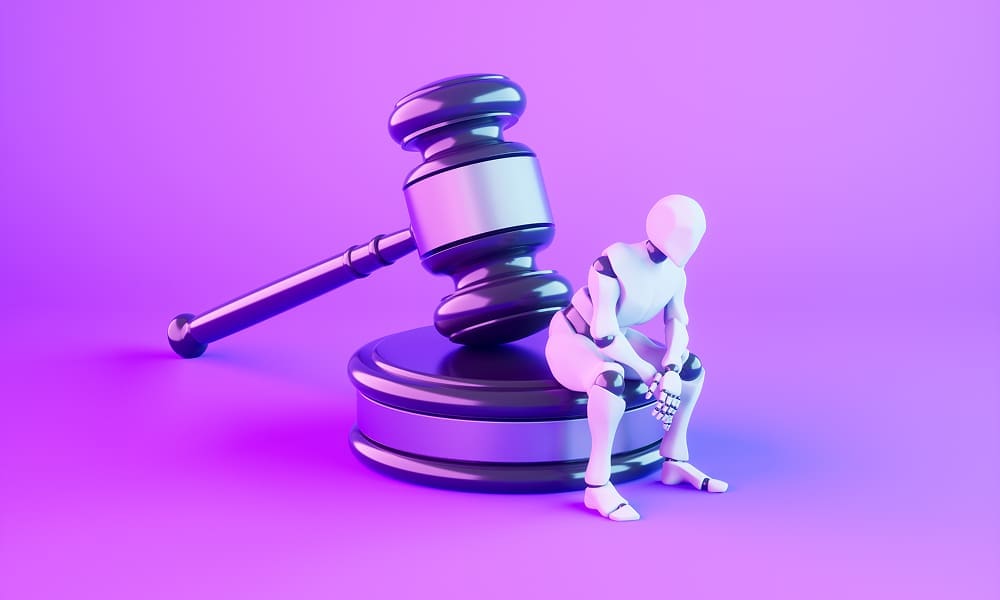
New York recently became the first state in the country to require disclosures when advertisements feature AI-generated people, often referred to as synthetic performers. Companies that fail to provide proper disclosure of AI content can face financial penalties, making this one of the first major regulatory steps aimed at AI-generated advertising.
At first glance, this looks like a compliance story.
It isn’t. It’s a trust story.
And for social media marketers, that distinction matters.
What the New York Synthetic Performer Law Actually Requires
The new law (S.8420-A; NY General Business Law § 396-b) requires advertisers to disclose when a person appearing in an advertisement was generated using artificial intelligence rather than being a real human.
That may seem like a small change, but it reflects a much larger shift happening across marketing. As AI-generated content becomes increasingly realistic, regulators are asking a simple question:
Should consumers know when what they’re seeing isn’t real? New York’s answer is yes.
Why Social Media Marketers Should Pay Attention to This and Future AI Disclosure Laws
The significance of this law extends far beyond legal compliance. Social media platforms have already been moving in this direction for years.
Algorithms are increasingly optimized around signals that are inherently human:
- trust
- engagement
- relevance
- conversation
- authentic behavior
- repeat interaction
The reason creator-led content continues to outperform is not simply because people enjoy it more. It is because platforms themselves are designed to amplify content that generates these signals.
At the same time, consumers are becoming more skeptical. They have more content competing for their attention than ever before, and they’re getting better at filtering out what feels artificial.
In many ways, New York’s disclosure law is simply catching up to a reality that platforms and consumers have already made clear:
People prefer people.
Platforms want trustworthy content. Consumers want trustworthy content. Now regulators are asking for greater transparency around trustworthy content.
Those forces are all moving in the same direction.
The Hidden Risk of AI Creators
Much of the conversation around AI-generated creators focuses on cost savings. That’s understandable. Creating a synthetic spokesperson can appear cheaper than hiring creators, managing partnerships, or producing ongoing content.
But marketers often ask the wrong question.
The question isn’t: “What’s the cheapest content we can create?”
The question is: “What creates trust, belief, and action?”
Lower production costs do not automatically create better business outcomes. Technology can generate content, but trust is much harder to generate. Audiences naturally connect with people, not avatars. Human creators bring lived experience, credibility, cultural relevance, and social proof that synthetic personalities struggle to replicate.
As AI creators become more common, the value of authentic human voices may actually increase.
The Real Cost Question
Many discussions around AI creators begin and end with production costs. But lower production costs do not automatically create better economics.
A synthetic creator may cost less to generate. But if that content produces lower engagement, weaker trust, reduced conversion, or lower platform distribution, the economics can quickly become worse, not better.
Marketing efficiency is determined by outcomes, not production costs. The cheapest content is not always the most profitable content.
Synthetic Creators May Create Hidden Performance Risks
The discussion around AI creators often assumes a neutral tradeoff:
Lower costs in exchange for similar performance.
That assumption may be flawed. As disclosure requirements become more common, audiences will increasingly know when they’re interacting with synthetic personalities.
For some brands, that transparency may reduce:
- trust
- engagement
- perceived authenticity
- conversion rates
In other words, synthetic creators may not simply perform differently than human creators. They may actively weaken the signals that platforms use to determine distribution and relevance. The risk isn’t just disclosure, it is diminished performance.
The Market Has Creator Marketing Wrong
There’s another misconception driving some of the excitement around AI creators.
Many marketers hear the word “creator” and immediately think expensive celebrity influencers and six-figure contracts. That isn’t the reality of today’s creator economy.
The creator ecosystem now includes:
- affiliates
- micro-creators
- niche experts
- customers
- UGC partnerships
- emerging creators
The choice is not between expensive influencers and AI avatars. There is an enormous middle ground. For many brands, that middle ground delivers the best economics because it combines efficiency with genuine trust. This is one reason creator-led marketing continues to perform so well across social commerce, paid media, and organic social strategies.
Technology keeps getting better. But attention and trust still follows people. And consumers ultimately buy from people.
Human Creators Generate More Than Content
One of the most overlooked differences between AI creators and human creators is that human creators generate signals.
They reveal:
- how consumers actually talk
- which messages resonate
- where objections exist
- what drives trust
- what motivates action
Those signals help improve:
- paid media
- organic content
- product positioning
- landing pages
- social commerce
- search behavior
AI can generate content. Human creators generate learning. And learning is often the most valuable asset a marketing system can produce.
The strongest creator programs do more than create content. They help brands understand what is actually worth scaling.
What Brands Should Do Next to Prepare for AI Disclosure Law Compliance
Brands don’t need to panic. But they do need to prepare.
Start by:
- Auditing where AI-generated imagery, video, voice, or digital personalities are being used across your marketing efforts.
- Establishing internal review processes that identify when disclosures may be necessary.
- Documenting how creative assets are developed so your team can adapt as regulations continue to evolve.
- Most importantly, avoid treating AI as a replacement strategy.
The strongest brands will use AI to accelerate workflows, improve efficiency, and support creative execution while continuing to invest in the human trust that drives performance. AI is a powerful accelerator. But it works best when it enhances creator-led systems rather than replacing them.
The Bottom Line
New York’s Synthetic Performer law is not just a compliance update. It’s a signal.
Regulators are asking for transparency. Consumers are asking for authenticity. Platforms are optimizing around trust. All three are moving in the same direction.
AI will continue to improve and become an increasingly valuable tool inside modern marketing systems. But today, attention still follows people. Trust still follows people. And ultimately, consumers still buy from people. The brands that win won’t be the ones replacing creators with AI. They’ll be the ones using AI to make creator-led systems smarter, faster, and more effective.
At Joybyte, we believe AI is a powerful tool—but creators remain the input layer of growth. The future isn’t AI versus creators. It’s AI accelerating creator-led systems.
Ready to Build a Future-Proof Social Media Strategy?
Whether you’re evaluating AI-generated content, scaling creator programs, or adapting to new compliance requirements, Joybyte helps brands stay ahead of change without losing sight of what drives results.
If you’re wondering how these shifts impact your business, let’s talk.