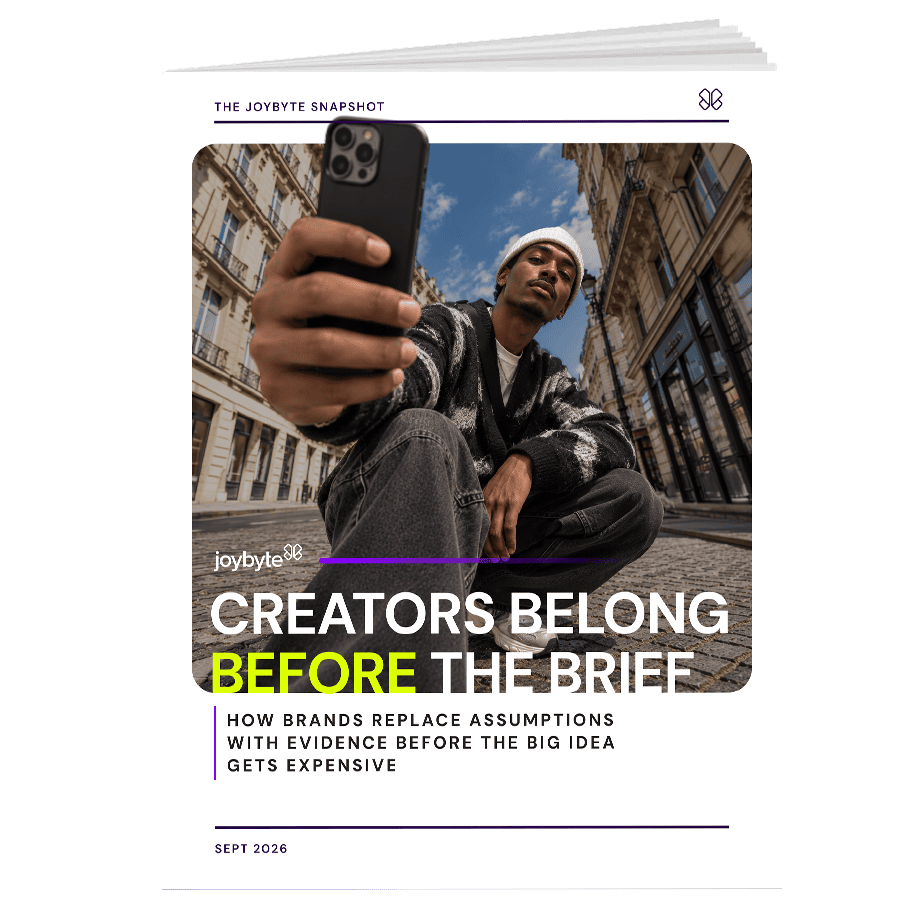
Creators Belong Before THE BRIEF
The traditional creative process starts inside the room: strategy, brief, creative, then creators. Joybyte’s new Snapshot makes the case for reversing that logic.
Creators shouldn’t simply receive the answer. They should help brands discover it—surfacing the language, tensions, use cases, objections, and cultural signals that make strategy and creative smarter before brands invest in scale.


Key Insights From the Snapshot
 Why creators are most valuable before creative direction is lockedWhy every brief contains the assumptions and limitations of the people writing itHow social changed who gets to shape the big ideaWhy creator proximity to audiences is as valuable as creator reachHow creators surface unexpected audiences, use cases, language, and objectionsWhy briefs should function as learning loops, not fixed instructionsHow creator signals can inform brand creative, paid, search, commerce, Amazon, retail, and product developmentWhy paid should amplify signals that have earned a response instead of scaling assumptionsHow TikTok Shop can validate whether creator-generated belief turns into commercial behaviorWhy the fastest-learning brands have an advantage over the brands with the most polished planning process
The Big Idea Shouldn’t Start
in the Room
For decades, marketing has operated on the assumption that the best ideas start inside companies. Get the right strategists together. Do the research. Write the brief. Develop the creative. Then bring creators in to distribute it.
But every brief starts with a limitation: the people writing it cannot personally represent every audience they’re trying to reach.
Meanwhile, audiences are already showing brands what they notice, question, repeat, ignore, buy, and believe every day. Creators sit directly inside that behavior.
The opportunity isn’t to replace strategists or creative teams with creators. It’s to give those teams better inputs before their assumptions become expensive creative decisions.

What You’ll Learn
 How to move from creator-as-distribution to creator-as-discoveryWhich creator signals belong upstream of the briefHow creators expose problems research didn’t anticipateHow to identify emerging audiences and unexpected use casesWhat audience comments, saves, questions, and conversions can teach creative teamsHow to turn creator experimentation into strategic directionWhy briefing should become an adaptive learning systemWhere creator intelligence can influence the broader marketing organizationHow paid and commerce complete the signal loop
Creators Are the First Mile of Creative Intelligence
Creators shouldn’t just distribute the answer. They can help brands discover it by surfacing the signals, behaviors, and ideas already emerging in-market.
Proximity Is More Valuable Than Reach Alone
A creator’s value isn’t only the size of their audience. It’s their proximity to the people brands are trying to understand—and what that proximity can reveal.
Creators Can Tell You When You’re Solving the Wrong Problem
Creator signals can challenge who a brand thinks its audience is, why people care, and even what problem the product is actually solving.
Stop Treating the Brief Like the Answer
The brief shouldn’t freeze learning. It should get smarter as creators test ideas, audiences respond, and stronger signals emerge.
Creator Content Is Research That Can Also Perform
Creator content does more than generate reach. It can test assumptions, uncover audience insights, and produce usable creative at the same time.
Paid Should Scale the Answer the Market Gives You
Paid works harder when it amplifies signals that have already earned a response—not assumptions the brand hopes will work.
Commerce Tells You Whether Belief Became Behavior
Engagement shows what resonates. Commerce helps reveal whether that interest is strong enough to drive action.
The Fastest Learning System Wins
The advantage isn’t having all the answers upfront. It’s building a system that learns faster—and carries those learnings into every channel and the next brief.
Put Creators Before the Brief
FAQs
Does “creators before the brief” mean creators replace strategists?
No. The argument is not that creators should replace strategists or creative teams. It’s that those teams make stronger decisions when creators enter the learning process before strategic and creative decisions become expensive to change.
What is the difference between using creators for distribution and discovery?
In a distribution model, the brand determines the message first and creators execute against it. In a discovery model, creators help surface audience language, use cases, objections, behaviors, and cultural signals before the final creative direction is established.
What signals should brands look for?
Joybyte’s Snapshot identifies five core areas: who sees themselves in the product, why they’re interested, how they naturally understand or describe it, what’s missing from the brand’s assumptions, and what to scale based on recurring response.
Does this mean brands shouldn’t brief creators?
No. It means briefs should become learning loops rather than fixed instructions. Brands can listen, test, learn, brief, amplify, and then listen again as new audience behavior emerges.
How does this affect paid media?
Creator and organic response can identify the narratives, hooks, formats, and content that resonate before larger paid investment occurs. Paid can then amplify validated signals rather than being asked to discover the strategy at scale.
Where can creator learning be used beyond social?
The Snapshot explicitly points to brand creative, paid social, search, product pages, TikTok Shop, Amazon, retail, product development, and future creator briefs.
What role does TikTok Shop play?
TikTok Shop can function as a validation layer: creator activity generates visibility, familiarity, and confidence, while commerce behavior helps show whether those signals translate into clicks, carts, customers, and repeat behavior.